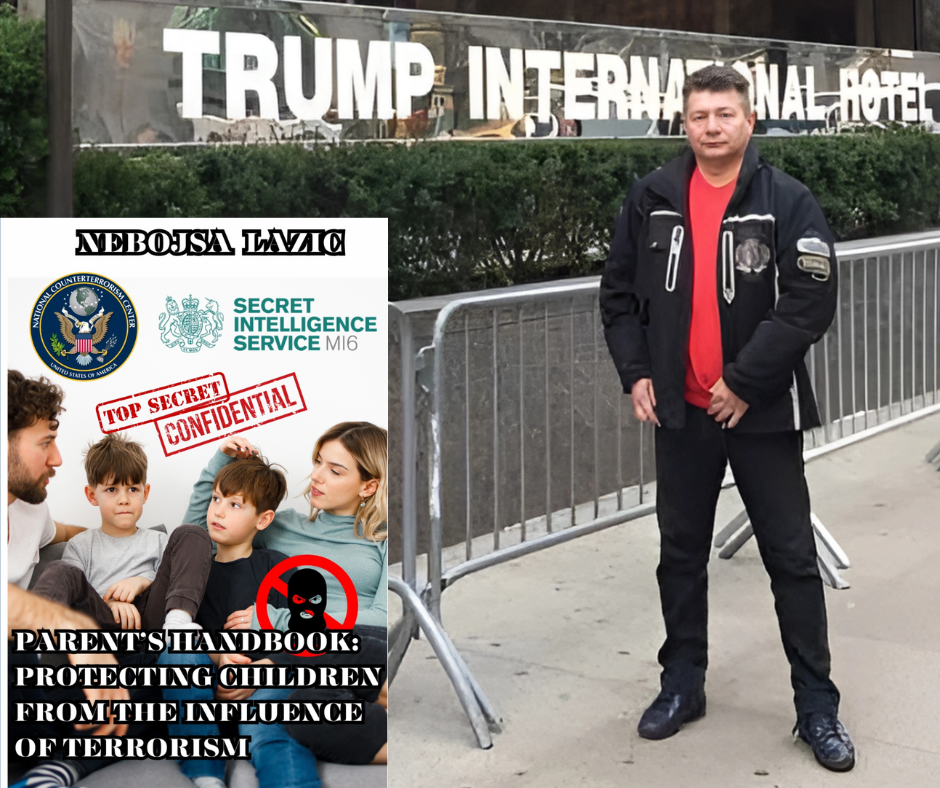
Today we are speaking with Nebojsa Lazic, also known by the nickname “Zenga,” the author of the “Parents’ Handbook: Protecting Children from the Influence of Terrorism.” As the very title indicates, this handbook aims to help parents properly explain to children the complex and often frightening concepts of terrorism, internet manipulation, and other modern security challenges.
Nebojsa Lazic – Zenga was born in Bijeljina (Republica Srpska, Bosnia and Herzegovina), where he still lives today. He began his professional career at the Ministry of the Interior of the Republic of Srpska in 1995 and currently serves as an independent inspector. Over the course of his extensive career, he has gained valuable experience in various areas of security and maintaining public order, which, according to the handbook, has positioned him as one of the most knowledgeable collaborators in his field. In addition to his practical experience, he has continuously furthered his education, including overseas security training, as well as intelligence and counterintelligence work, thereby enhancing his knowledge and skills in this area.
In the handbook itself, the importance of open and honest communication with children about terrorism—tailored to their age and psychological needs—is emphasized, as well as the significance of critical thinking and recognizing manipulation on the internet. It is our pleasure to present a brief conversation with Mr. Lazic, in which he reveals what inspired him to write such a guide and how parents can practically implement the advice and guidelines contained in the book.
1. What inspired you to write precisely this kind of handbook on protecting children from terrorism and its effects?
“The main motivation was the need to offer parents a concrete, understandable, and practical guide on how to communicate with children about a topic that is both complex and often frightening. I noticed that parents often avoid the subject or don’t know how to approach their children when they ask questions about violent events. Various examples from my environment and personal insight into the negative consequences of fear in children inspired me to create material that will help them feel prepared rather than helpless.”
2. How can parents approach the topic of terrorism in a way that doesn’t induce excessive fear in children?
“The most important thing is to adapt the explanation to the child’s age. For younger children, we avoid detailed and disturbing descriptions. The focus is on reassuring them that there are people and services that protect them. Older children should be spoken to openly about facts and manipulation mechanisms, but without sensationalism. The key is honest, calm communication: providing enough information so that they know how to recognize risky situations, but also making sure they always have someone to turn to if they feel anxious or confused.”
3. In your opinion, what are the most common mistakes parents make when trying to protect children from disturbing content and manipulation?
“One of the most common mistakes is completely avoiding the topic, assuming it’s better if children ‘know nothing.’ Unfortunately, this only fuels children’s imaginations and fear of the unknown. Another mistake is when parents speak too dramatically about violent events, unnecessarily causing panic. Also, not talking about online dangers and giving children complete freedom on the internet without any supervision creates space for manipulation. The best solution is to find balance: talk openly and concretely, but always leave room for additional questions and discussion.”
4. The handbook extensively covers the dangers of diversion and manipulation over the internet. What would you highlight as the key steps parents can take to protect children in the digital world?
“The first step is to establish basic rules of online behavior together with children: don’t readily accept unknown contacts, don’t share personal information, and learn to recognize fake news or suspicious links. Second, it’s important that parents are familiar with the platforms their children use, maintain regular communication about what the children watch, like, or who they interact with. The third aspect is building trust—children need to feel they can report any disturbing message or contact to their parent or another trusted adult without fear. Lastly, they should be taught that any suspicion or provocation can be reported to the relevant services or authorities online.”
5. In discussing and educating children, how can we simultaneously emphasize the values of peace, tolerance, and understanding, while still clearly presenting the real dangers of terrorist activities?
“I always start from the premise that the essence of the fight against terrorism and violence is strengthening empathy, mutual respect, and understanding of differences. Children can be told there are individuals and groups spreading intolerance, but there are many others, including the police, rescuers, and ordinary people, who stand for peace and safety. So, while introducing them to real threats, we emphasize positive examples of solidarity in society. In doing so, we send the message that violence is not the solution, while also being honest about the fact that it unfortunately exists and that steps must be taken to protect each other.”
6. How should parents react if they notice their child displaying fear or anxiety following media reports of terrorist attacks?
“The most important thing is to first have an open discussion with the child about what exactly is scaring them and where that fear is coming from. The parent should calmly explain the context—for example, that such attacks are rare, that there are services actively working to prevent such events, and that the child is not alone. At the same time, if the child’s reactions are more intense (frequent nightmares, constant nervousness, avoiding social situations), it might be a good idea to seek advice from a professional, such as a psychologist or pedagogue, so the child can receive adequate support and learn coping strategies for stress.”
7. How important is it to involve schools and the local community in educating children about terrorism and protecting them from violence?
“It’s extremely important that this topic doesn’t remain confined to the home. Schools and local communities can provide various prevention programs, lectures, and workshops where children can learn about the concept of terrorism, manipulation, and ways to protect themselves, in a manner they can understand. Such collective efforts foster a sense of solidarity and community, while also sending the message that caring for children’s safety and combating violence is a shared responsibility of all members of society.”
8. What should a parent do if a child shows an unusual interest in violent content or expresses sympathy for extremist ideas?
“The parent needs to show genuine concern, but also understanding—every extreme interest often has a deeper cause, whether it’s curiosity, rebellion, or a feeling of not being accepted socially. The conversation should be open: ask the child what attracts them to that content, without judgment or yelling. Then, explain the real consequences and contrast them with the humane and peaceful values that society as a whole strives to uphold. If you find that the child still doesn’t distance themselves from these ideas or you notice serious changes in behavior, reach out to a professional or the school psychologist. Recognizing this interest early is crucial for preventive action and guiding the child in the right direction.”