Within the U.S. administration—particularly among agencies dealing with international organized crime and financial flows—there is growing discussion about the need to expand their focus to the Western Balkans. At a time when sanctions have already been imposed on several regional political figures for corruption and destabilizing activities, analysts believe that the next phase of U.S. action could be linked to international organized crime.
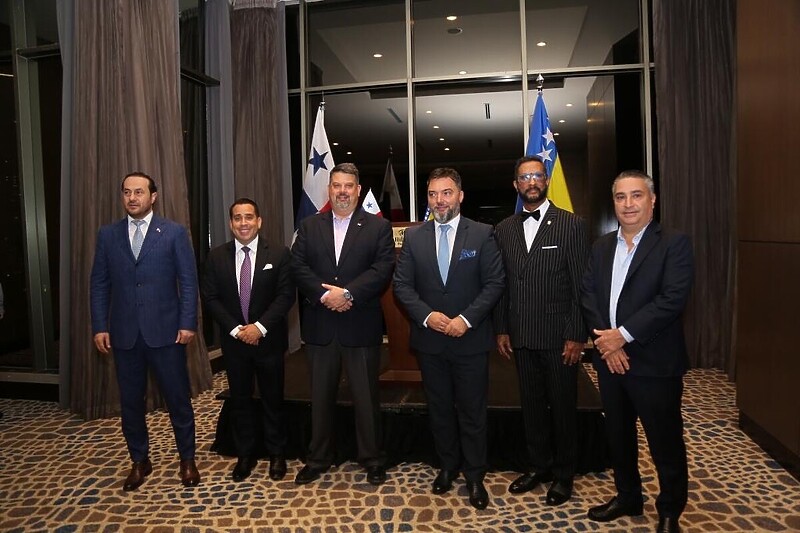
Kosarac in Focus Due to Panama Connections and Political Controversies
The name of Stasha Kosarac, a senior SNSD official and Minister of Foreign Trade and Economic Relations of Bosnia and Herzegovina, is already on the U.S. sanctions list due to what the Treasury describes as corrupt dealings, abuse of office, and actions that undermine Bosnia and Herzegovina’s institutions.
However, additional attention has been drawn to the appointment of Fatih Kol as Bosnia and Herzegovina’s honorary consul in Panama—an individual later associated with circles connected to international narcotics networks. Although Kosarac denies wrongdoing and claims that the appointment was “recommended by the authorities of Panama,” political and security concerns remain, with many actors in BiH questioning the purpose of strengthening diplomatic relations with Panama City.
According to several international experts, cases like this—unusual diplomatic moves, atypical business connections, and sensitive contacts—may prompt U.S. agencies to increase analytical focus, especially in the context of the global fight against networks that combine political influence, corruption, and criminal activity.
A Shift in the U.S. Approach: From Political Corruption to Criminal Networks
Over the past two years, OFAC, together with structures under the Office of Terrorism and Financial Intelligence (TFI) and international partners, has signaled a shift toward a new operational phase: the target is no longer only political actors who destabilize institutions, but also individuals who link political power with financial and criminal networks across borders.
Analysts in Washington increasingly discuss the possibility that future sanctions could be imposed on individuals from the Balkans on the grounds of international organized crime, especially in cases involving:
- the use of foreign jurisdictions such as Panama, the UAE, Cyprus, or Hong Kong,
- unusual diplomatic activity,
- political involvement in international money-laundering channels,
- ties to criminal groups in South America and Western Europe.
In this context, cases like Kosarac’s—not because of proven criminal conduct, but due to controversial diplomatic practices and politically sensitive associations—are seen as indicators that U.S. institutions may be examining a broader pattern.
The Balkans as a “Risk Zone”
The United States increasingly views the Western Balkans as a region where several destabilizing factors intersect:
- political corruption,
- organized crime,
- money laundering,
- and international criminal networks linked to narcotics, smuggling, and offshore structures.
For this reason, analysts believe that the U.S. may soon expand its sanctions list—this time not only for political destabilization, but also for links to international organized crime.